
EP_AI: AI FOR BUILDING ENERGY MODELING
CRITIC | DENNIS SHELDEN
SPRING 2025
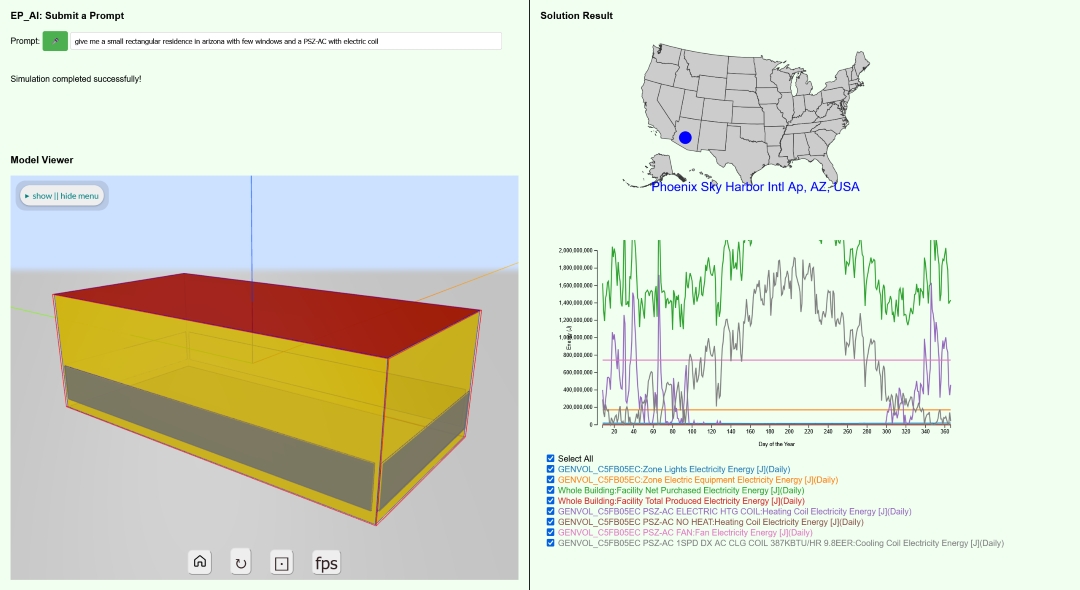
EP_AI is a research project that explores how AI can accelerate building energy modeling during early-stage design. While energy modeling is a powerful tool for improving building performance, its complexity and steep learning curve often restrict its use to external specialists and late-stage projects. As a result, energy feedback is typically introduced late in the design process, when major decisions have already been made and when change is costly and limited.
This research argues that energy modeling is more valuable earlier in the design process, when geometry is loose and decisions are still fluid. EP_AI proposes a shift from high-fidelity, specialist-driven workflows toward a fast, low-resolution modeling approach that supports design intuition rather than replacing expertise. The goal is not accuracy for compliance, but accessibility for informed decision-making.
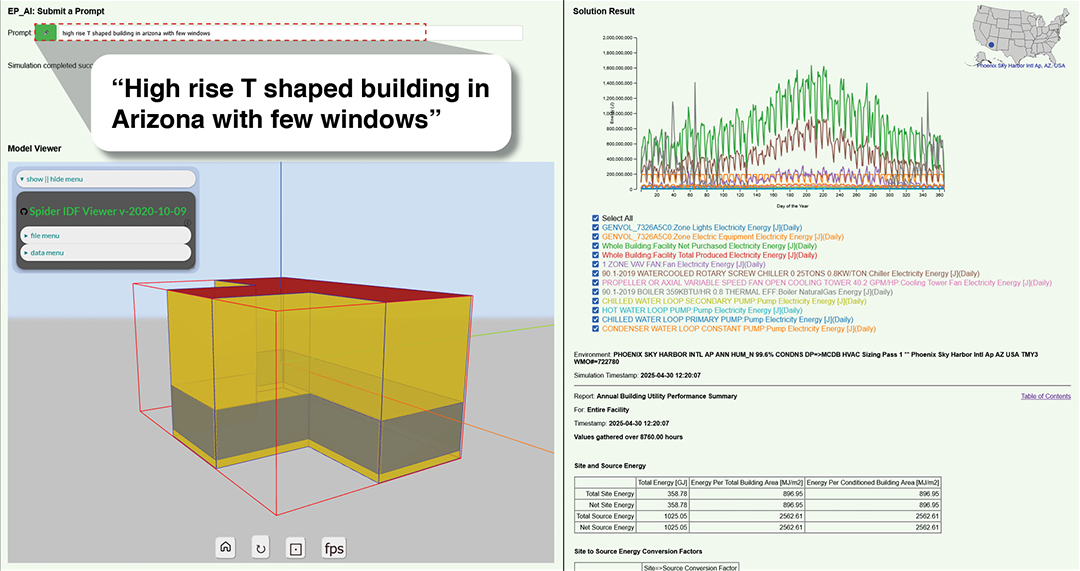
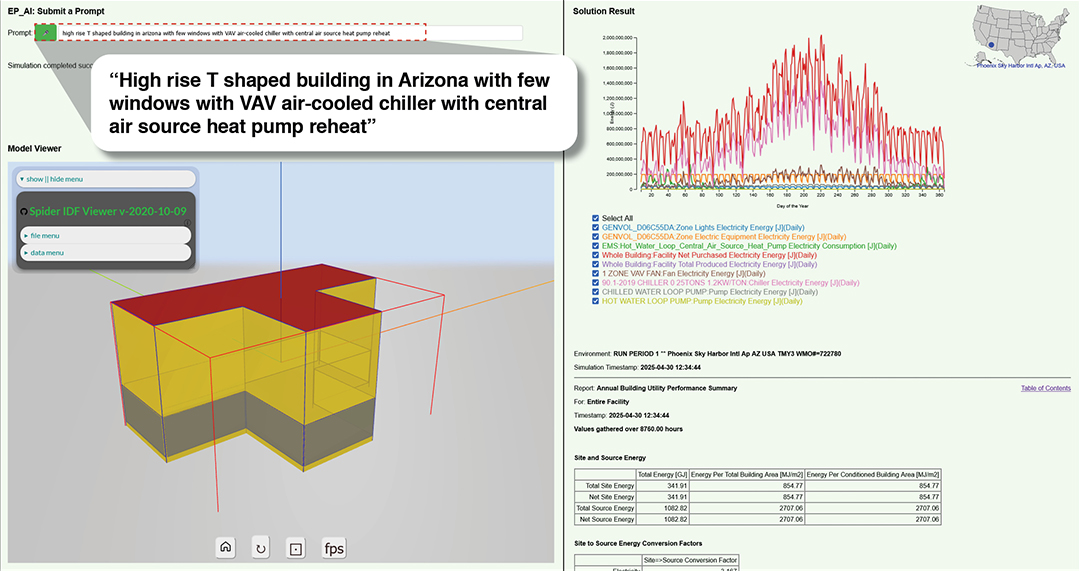
EP_AI operates through a simple prompt-based interface. Users describe a building in general, natural language terms such as “square-shaped” or “in Arizona” and the system translates that description into an EnergyPlus simulation. By rapidly iterating on prompts and comparing results, designers and non-experts alike can evaluate energy implications without constructing a full model. In this way, EP_AI shortens the feedback loop between design and performance, bringing energy modeling into the space where architectural decisions are actually formed.
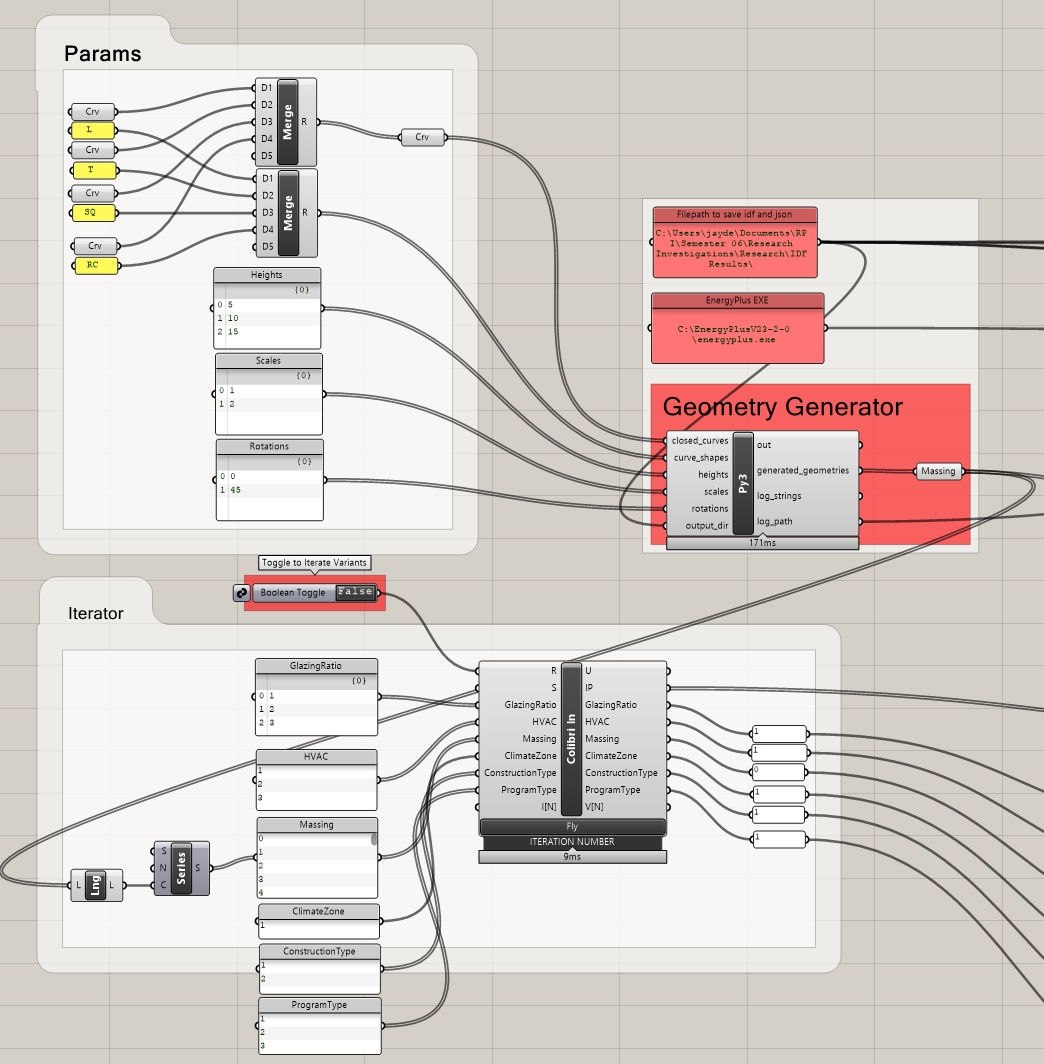
EP_AI doesn’t directly “invent” an energy model, instead using AI to assemble one that closely matches user criteria. It runs on a database of pre-generated EnergyPlus building components like geometry, HVAC systems, and climate data. These are stored as modular input fragments. A fine-tuned language model reads the user’s prompt and translates it into a structured query that selects the best-matching fragments from the database. These pieces are then merged into a complete EnergyPlus input file and simulated using EnergyPlus, with results returned to the user as charts and basic model views. By separating model generation into modular parts and using AI as a translator rather than a simulator, the system stays fast, scalable, and flexible while remaining grounded in established energy modeling workflows.